
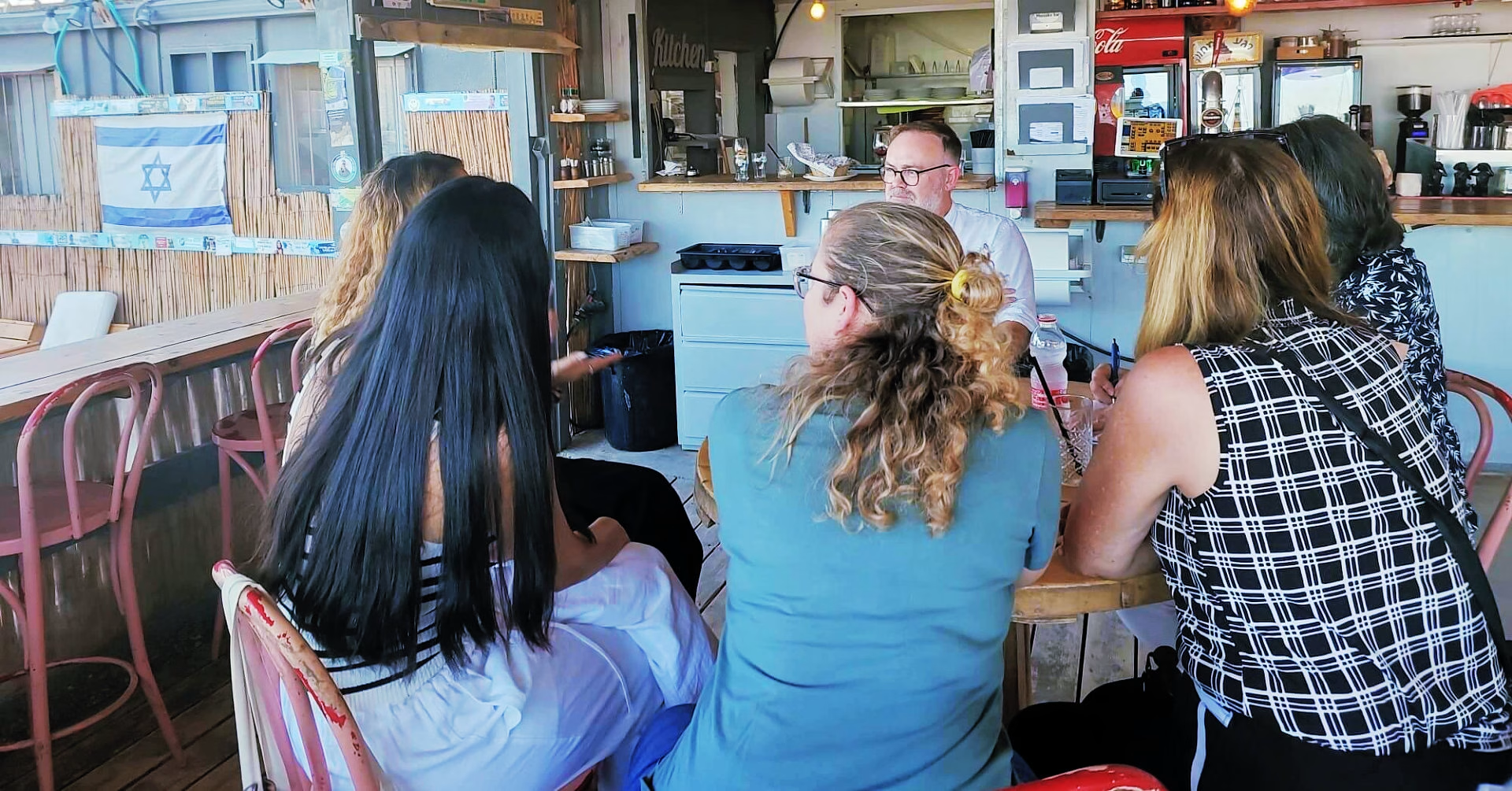
At a retreat perched above the Dead Sea, some 40 young Israeli victims of terror gathered to confront the trauma that has defined their lives since October 7. For some, it was the first time they had left their homes or spoken openly about their experiences – especially in a group of peers who truly understand.
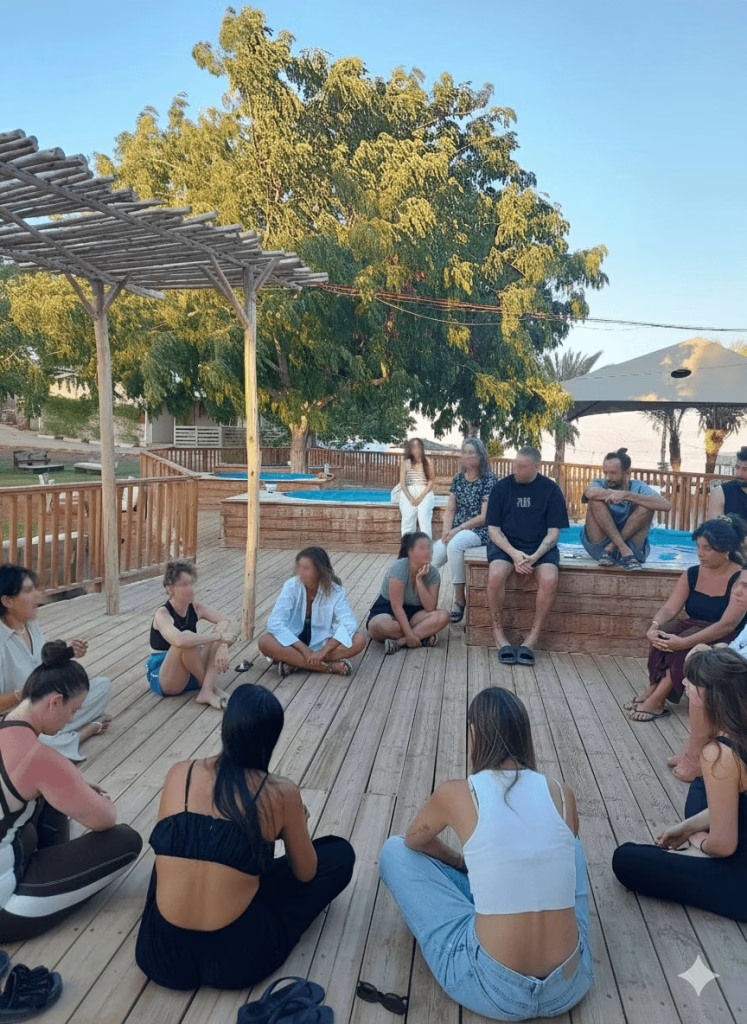
The two-day resilience retreat, sponsored by ICEJ-UK, was designed for young adults whose lives had been overturned by terror.
One participant admitted that simply arriving was a milestone. A 25-year-old woman from Sderot, paralysed by panic attacks at roadblocks since that dreadful day of October 7, wept in the arms of Ortal, the retreat’s project manager, upon stepping out of her car. “It was not just about surviving,” Ortal explained. “It was about the courage to live again.”
Finding Breath, Voice and Community
Others described moments of breakthrough during the sessions. “The first day was emotionally intense,” one participant said. “But the staff’s sensitivity helped me cope. They really saw me, and support came without me even asking.” Another recounted battling anxiety and finding release through unconventional therapies. “I had an anxiety attack but went through a two-hour process and ended up crying. Dancing and drawing helped me see the small successes and how important they are.”
Daniel, 39, reflected on the retreat’s profound impact: “It was so precise and perfect. I came back to life; it gave space to breathe, and we had the chance to both receive support and support others. No one forced anything; we could simply participate. I haven’t stopped talking about it. Every activity had depth, and the environment was non-judgmental.”
Daniel shared about his friend, Avi, a social worker and therapist, with whom he witnessed the unimaginable horrors that erupted on the street outside his home. As the battle outside raged, Avi received a call for help from a patient he had counselled for eight years. As he tried to calm him over the phone, Avi heard him being murdered by terrorists before the phone went silent. “It was almost impossible to go on after that, especially for Avi,” Daniel said. “Honestly, through this retreat, you saved a soul in Israel. After the retreat, Avi was finally able to return to work again after two years.”
Leah, 25, agreed: “I’ve been to several retreats since October 7, and this was the most life-changing and helpful. I came because I realised I could not continue on my own anymore and found that others felt that way as well. Volunteer therapists gave practical tools such as writing, thankfulness, and other workshops to help us cope. The retreat connected us with a community. It opened the door to the life I had hoped for but didn’t think could happen. I had been engaging in ‘self-harm’ and was suicidal. Today I have new friends and have stopped these harmful behaviours. After two years at home, I am now able to return to work. I hope we can continue to meet to support one another into the future.”
Choosing Life After Terror
Stories like these are no longer isolated, but since October 7, 2023, the numbers have surged: over 70,000 victims, including more than 30,700 new victims after the attacks. The need for targeted support has never been greater. Schools, social services, and mental-health infrastructure are overwhelmed.
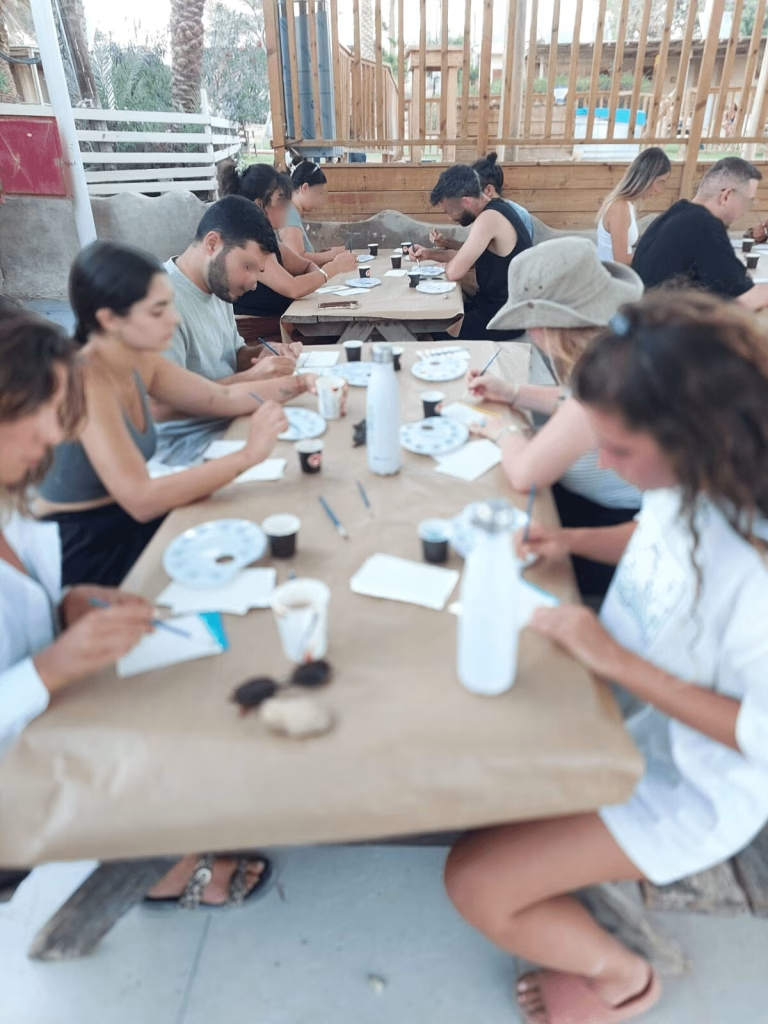
“Traditional therapy is no longer enough,” Ortal said. The retreat uses holistic approaches: painting, drawing, dance therapy, and exposure to nature. These structured interventions help people express trauma, rebuild resilience, and reconnect with daily life.
One young man reflected after a music workshop: “In 40 minutes, I was able to completely let go. I saw my successes and failures, and how it’s possible to live better. I’m so glad I didn’t give up, even when it wasn’t easy.”
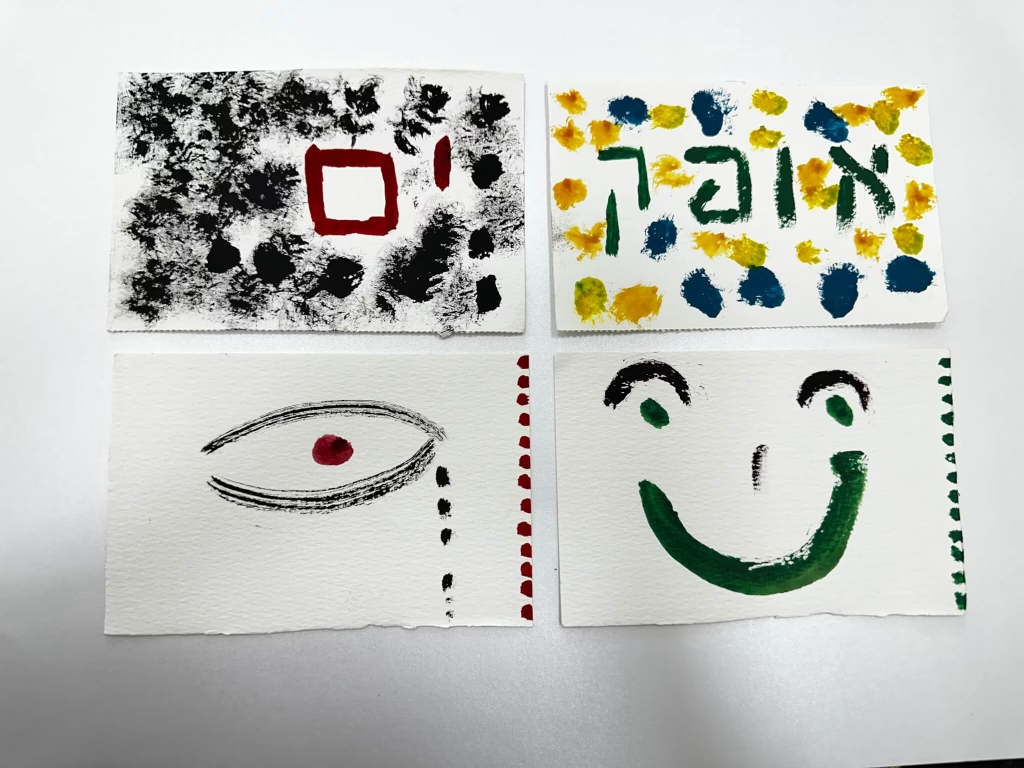
Eli, from Ofakim, lost family members before October 7 and witnessed his community being attacked. At the retreat, he found creative outlets and painted a piece symbolising the choice to move toward life despite grief. “‘Ofakim’ means ‘horizon,’” he explained to Nicole Yoder, ICEJ Vice President of AID and Aliyah. “You can focus on what’s behind you or look ahead, the choice is ours.”
Others, like Noa from Magen and Dov from Nir Oz, shared the struggles of displaced and scarred communities. “Together we are a unique group, each one a whole world,” a participant said. “I still have a way to go, but with retreats like this, I will get there.”
The ICEJ-sponsored retreat is not a temporary escape; it is a lifeline for young Israelis navigating the aftermath of October 7. Through shared experiences, creativity, practical tools, and compassionate guidance, participants are discovering that healing is possible, even amid unimaginable loss. In the face of trauma, courage, resilience, and human connection light the path forward.
But these retreats can only continue if support continues. Please consider a donation to our Renew and Rebuild Israel Fund to help many more Israelis overcome trauma and rebuild their lives.
*Names have been changed to protect privacy