

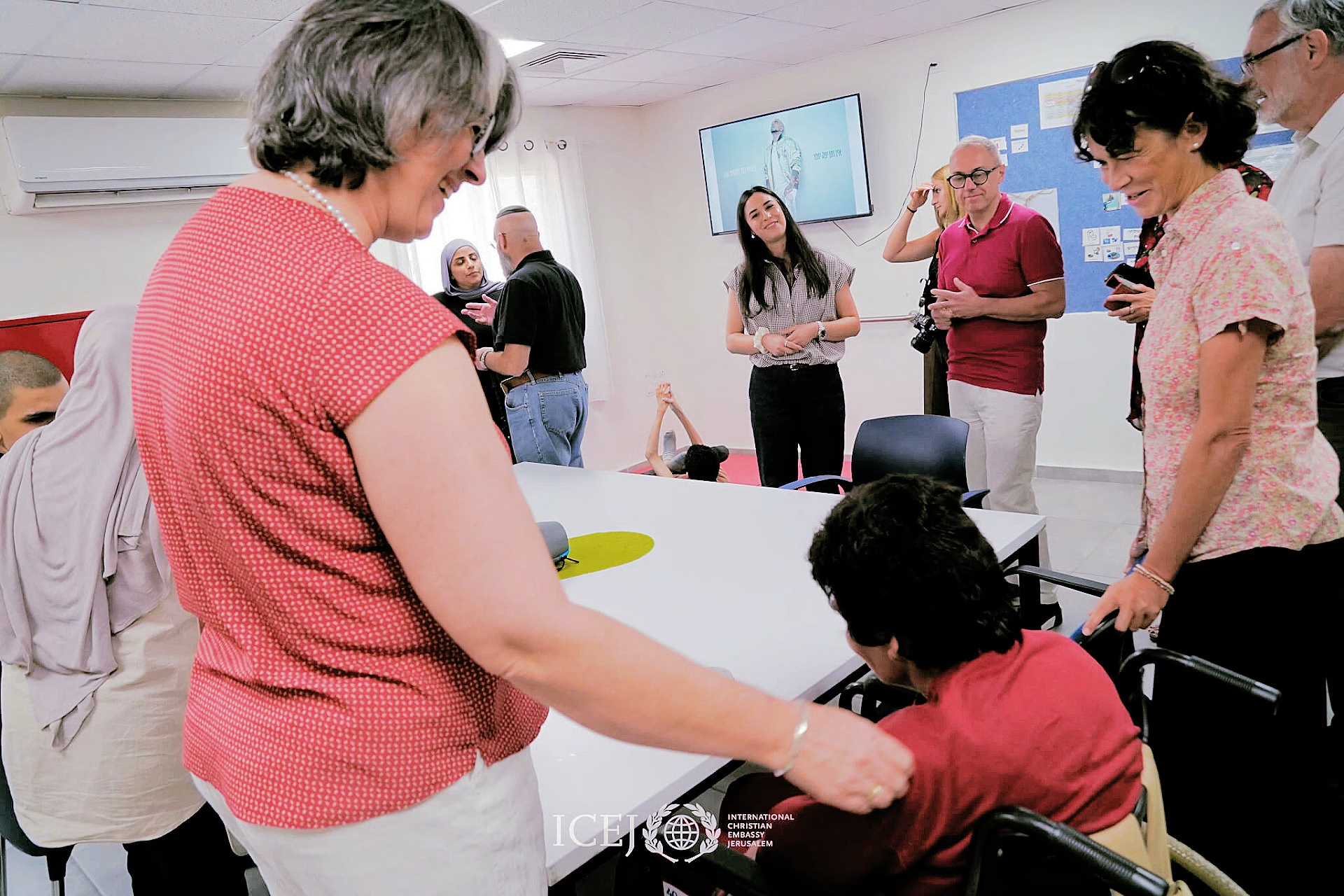
ICEJ staff recently visited a special needs center in Israel, located in Kibbutz Usha in the Zevulun region of northern Israel. During the visit, the staff saw firsthand the dedicated work being done to support people with cognitive and physical disabilities and autism.
Behind this work is a team that includes managers, social workers, nurses, occupational therapists, speech therapists, behavioural specialists and other professionals. Together, they create structured daily routines and programs that help participants develop skills, build confidence and experience greater independence.
Two special needs daycare centers are located in close proximity in adjacent kibbutzim, and the ICEJ staff visited both.
Building Skills and Independence
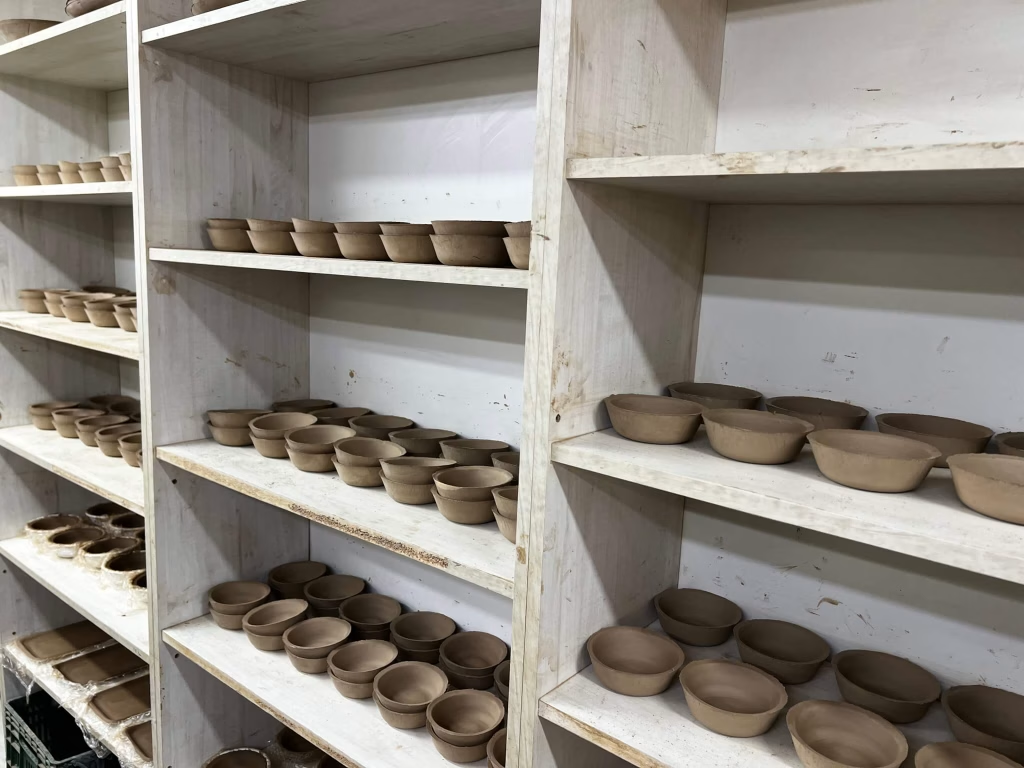
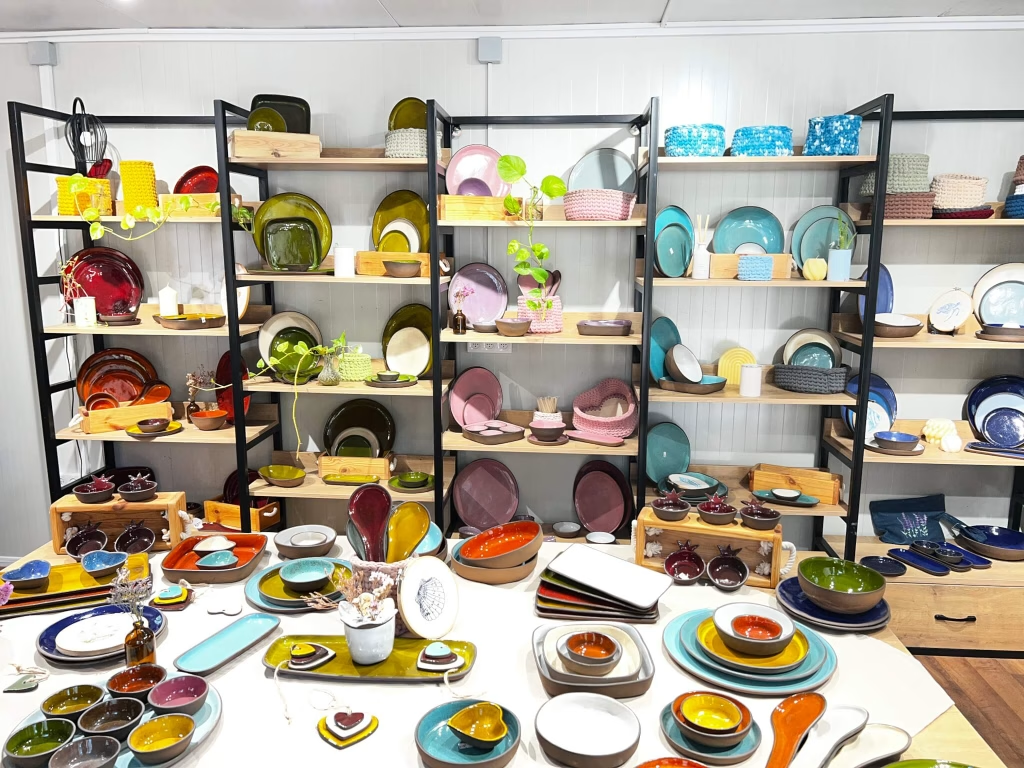
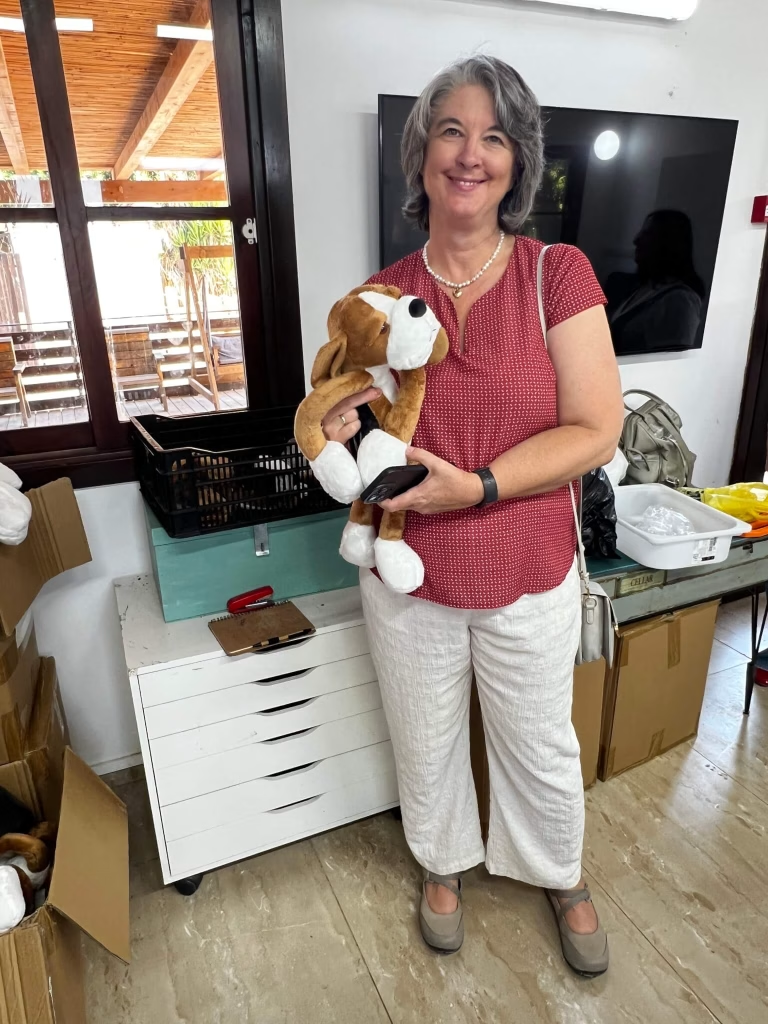
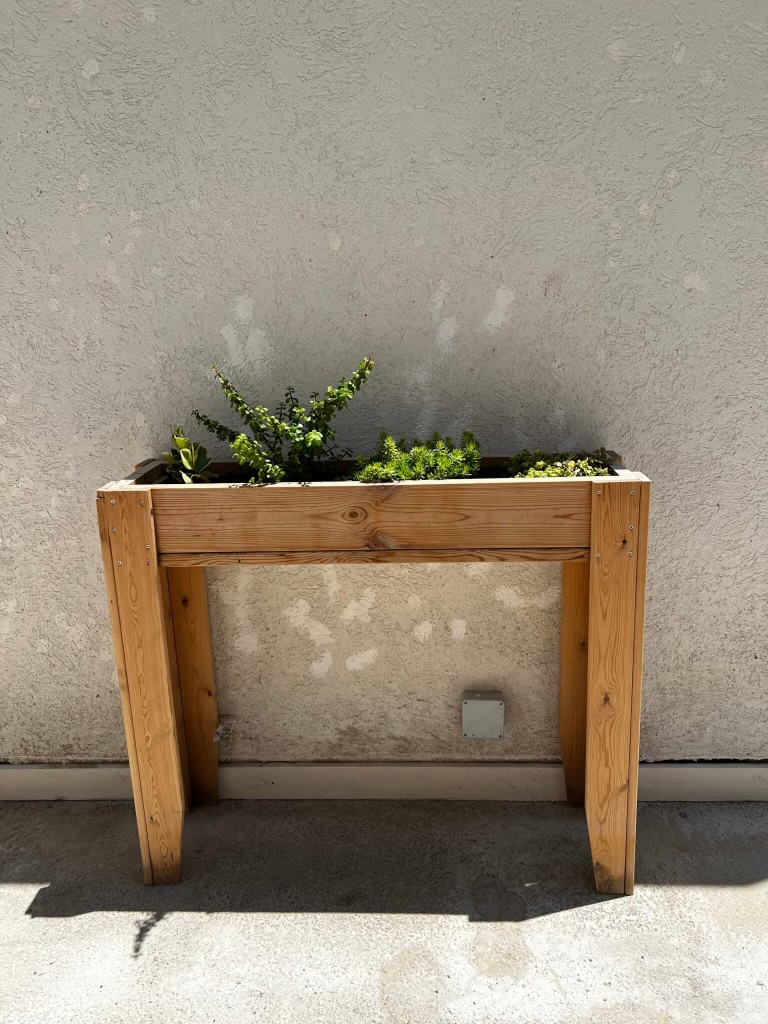
At the first center, located in Kibbutz Kfar HaMaccabi, the manager, Leigh, who is also a social worker, showed our team around the facility, where they witnessed various workshop activities in progress, such as preparing clay for making beautifully painted ceramic items, learning embroidery to create bags and wall hangings, making special toys filled with a sandbag intended to provide comfort and a sense of security for children with autism and a woodwork studio where special flower boxes and other items are made.

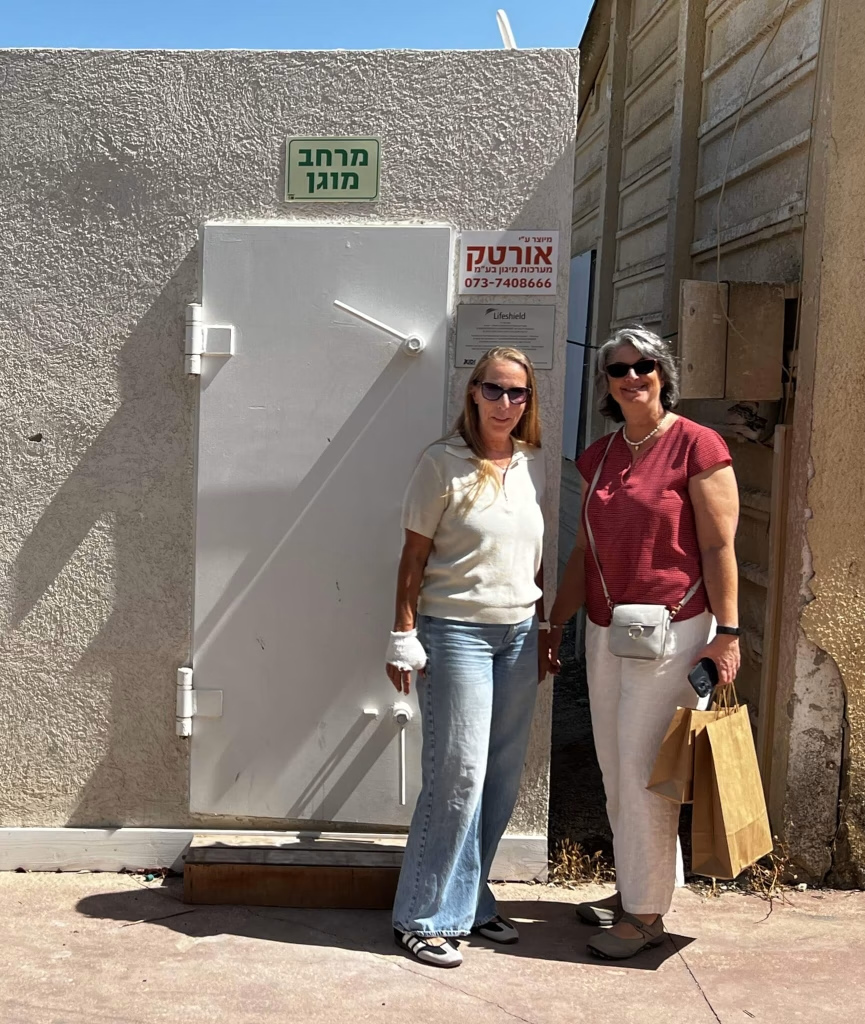
These activities provide opportunities to learn practical skills, encourage creativity, and produce items others can enjoy, with some prepared for sale in a small on-site shop. The team enjoyed purchasing some of the beautiful pottery items in the shop, and along the way, also visited the protective shelter donated through the generosity of our German friends.
Leigh explained that this center is an occupational facility for those over 21 with cognitive, autistic, or physical disabilities. Some of their “clients” live with their parents, while others reside in group households. They have 120 clients who attend the center daily between 7 am and 3 p.m., and they operate in a friendly, open environment, without any fences on the property.
Care and Community at Kibbutz Usha
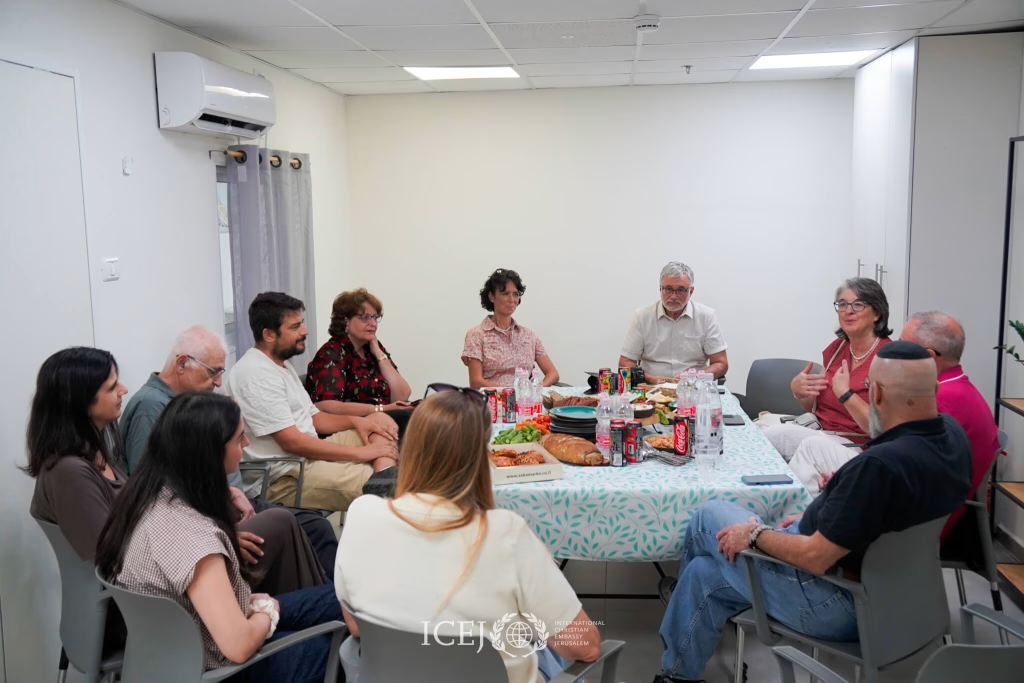
After a short drive to the second center, located in Kibbutz Usha, the ICEJ leadership and the daycare center leadership sat down to a delicious spread of food and refreshments. They shared the ICEJ’s work and how thousands of Christians around the world support Israel, while also learning more about the Center’s facilities and care, and hearing about the wider network of facilities across Israel that caters to both Jewish and Arab clients with special needs. They also shared the importance of their work in supporting family members and their concerns about caring for loved ones when they can no longer do so.
A Shelter for a Vulnerable Community
The visit also included the dedication of a large bomb shelter for this facility. ICEJ Vice President for AID and Aliyah Nicole Yoder, together with ICEJ-Switzerland national director Dominique-Pierre Walter, placed two dedication plaques at the entrance. Operation Lifeshield director Shmuel Bowman explained that this is a special shelter for schools, approved by the Israeli Ministry of Education.
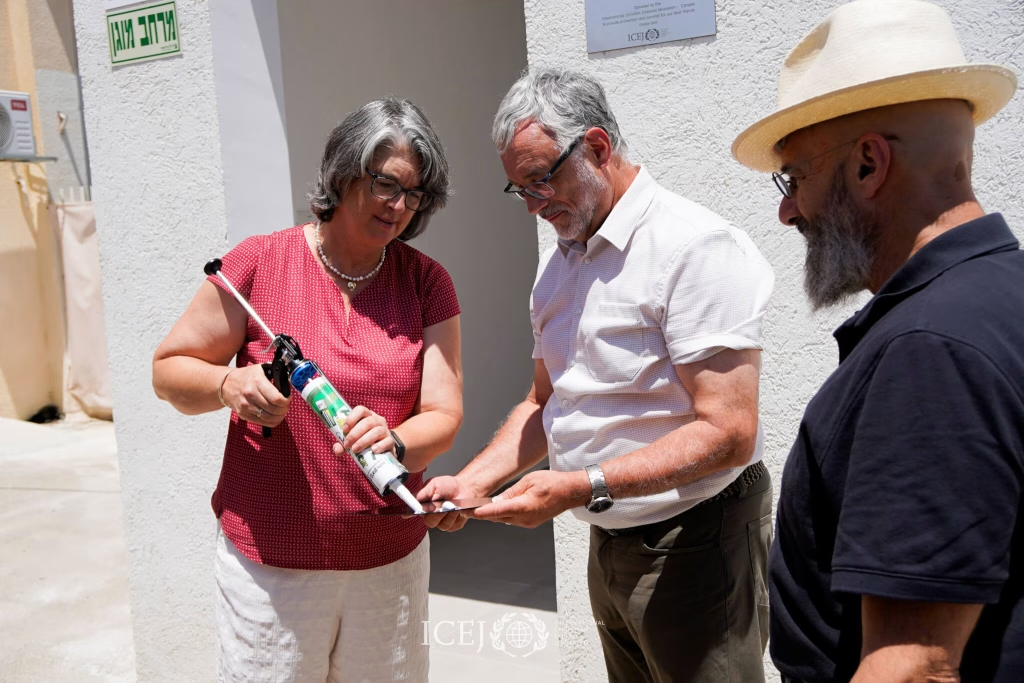
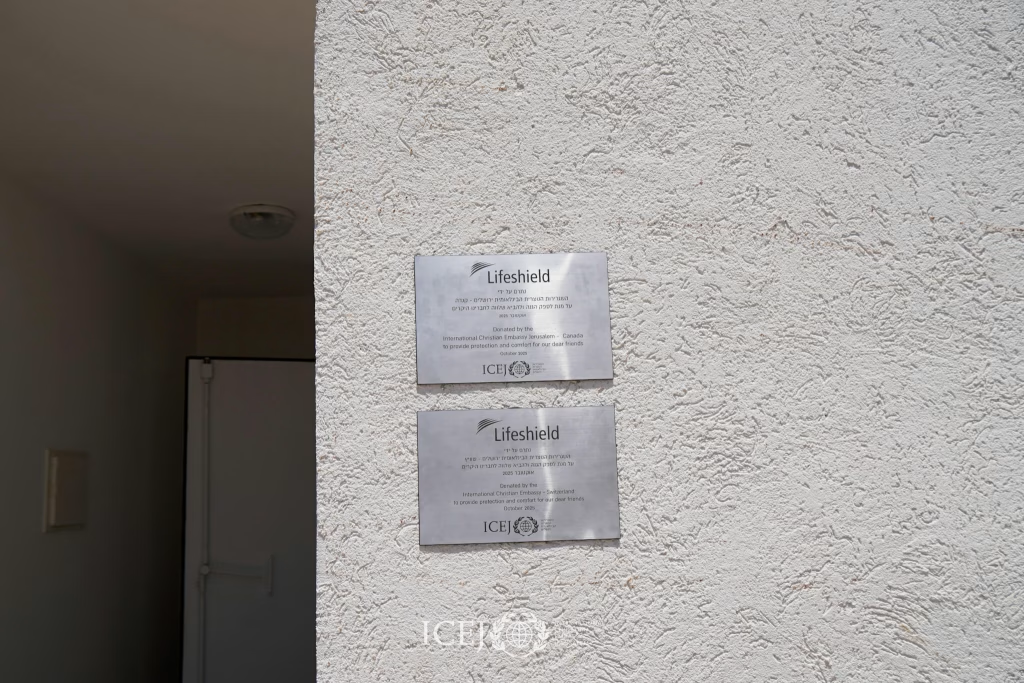
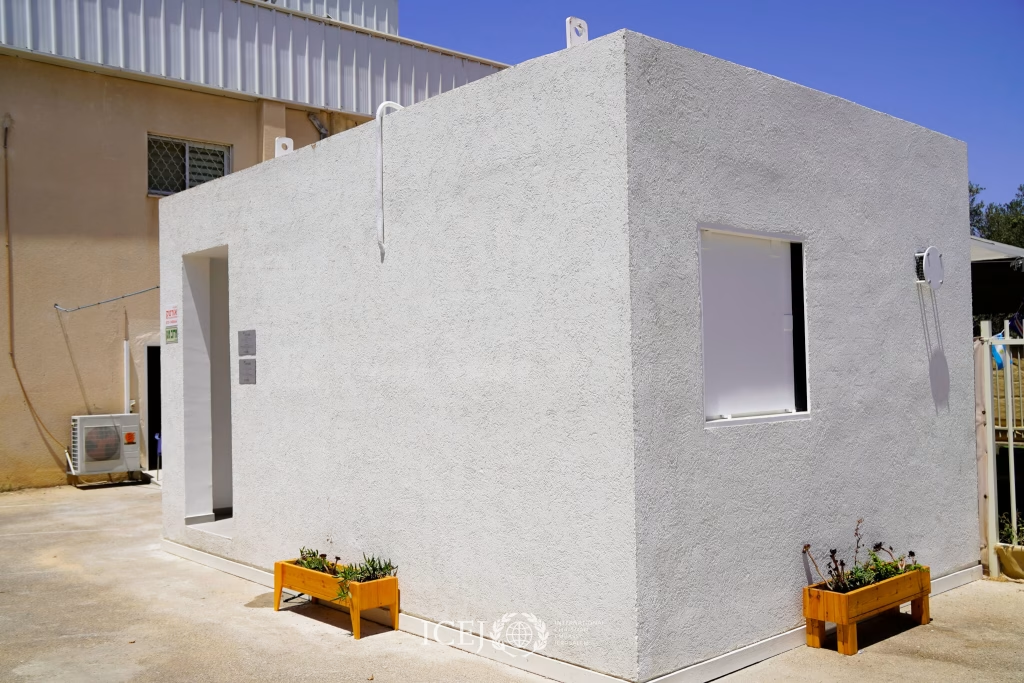
“Today we have had the privilege of dedicating this beautiful shelter for a facility that cares for special needs people, and we are so excited and so grateful to both our friends from Switzerland and from Canada who have made this special day possible”, shared Nicole Yoder.
The ceremony offered a meaningful expression of love and solidarity with a community that depends on both specialized care and protection during times of crisis. The new Usha shelter will protect the daycare center’s clients and staff while also serving nearby residents, since many older homes on the kibbutz lack their own protective spaces.
Small Steps, Meaningful Progress
This Kibbutz Usha daycare center serves around 70 people each day through specialized programs tailored to individual needs. Some participants need help with everyday activities such as eating, dressing, and showering. Others participate in structured behavioural programs designed particularly for people with autism, where even simple achievements can represent significant milestones.
One of the social workers, Tal, described how participants are progressing from using only spoons to eat with to learning how to use knives and forks properly. “What might seem like a small step is, for these participants, an important part of developing life skills and independence”, she shared. “Daily schedules are carefully structured, with activities adapted to the abilities and needs of each individual.” For participants who cannot read, staff use visual pictures to communicate the schedule and expectations for the day.
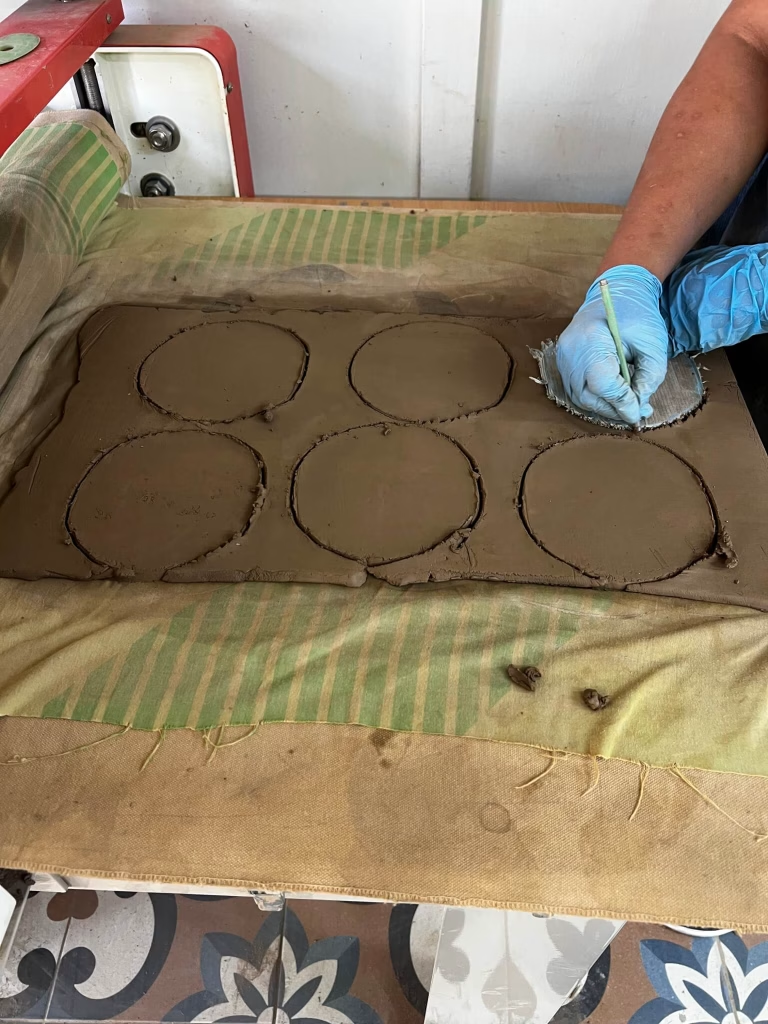
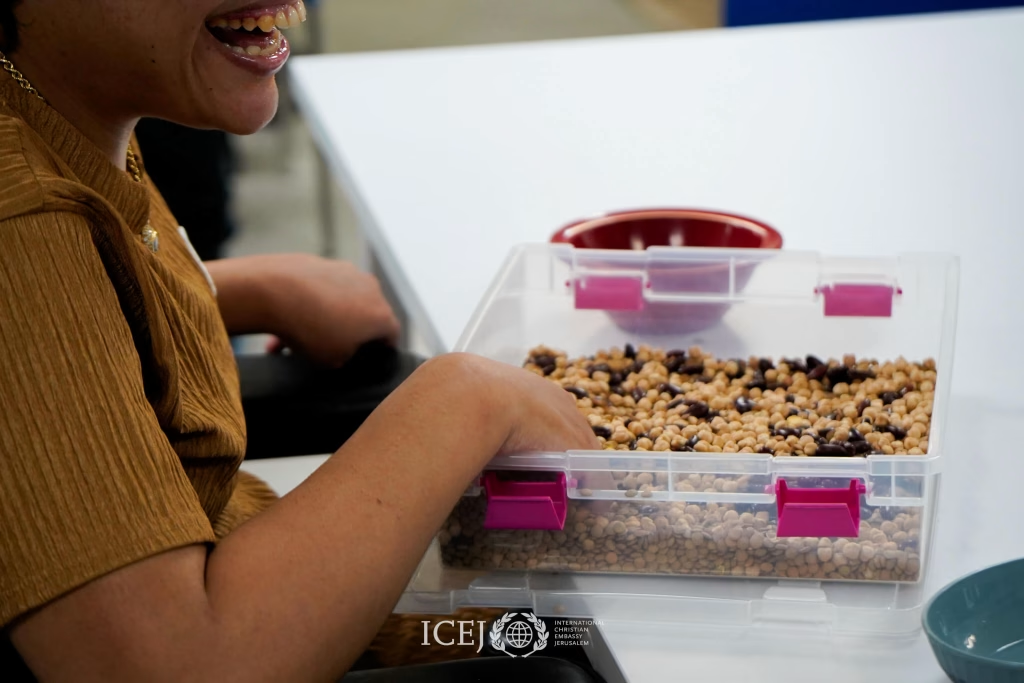
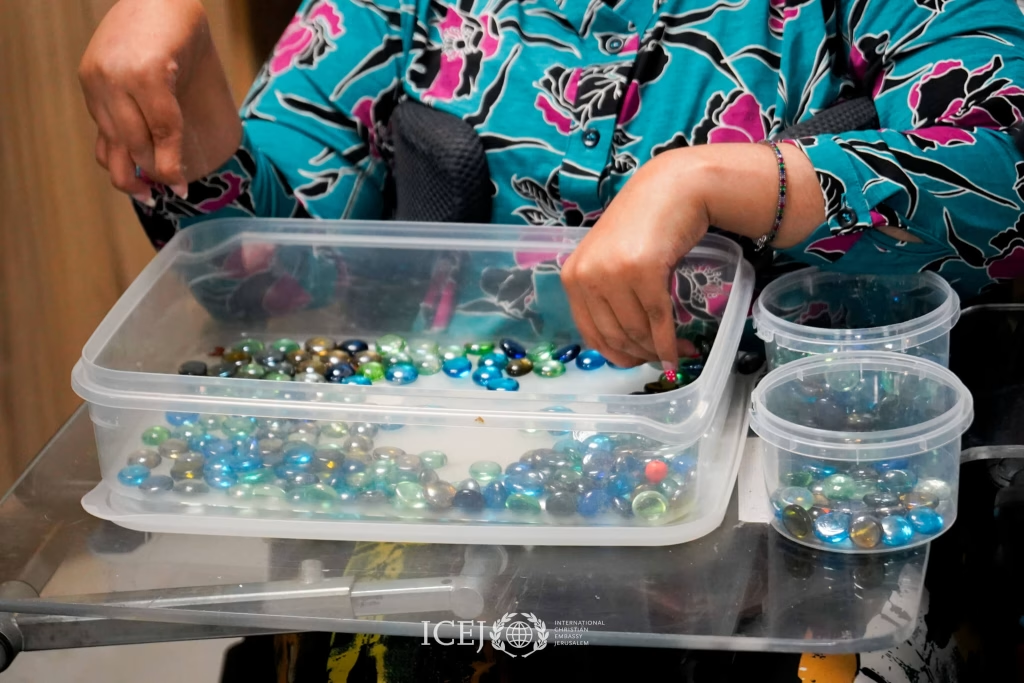
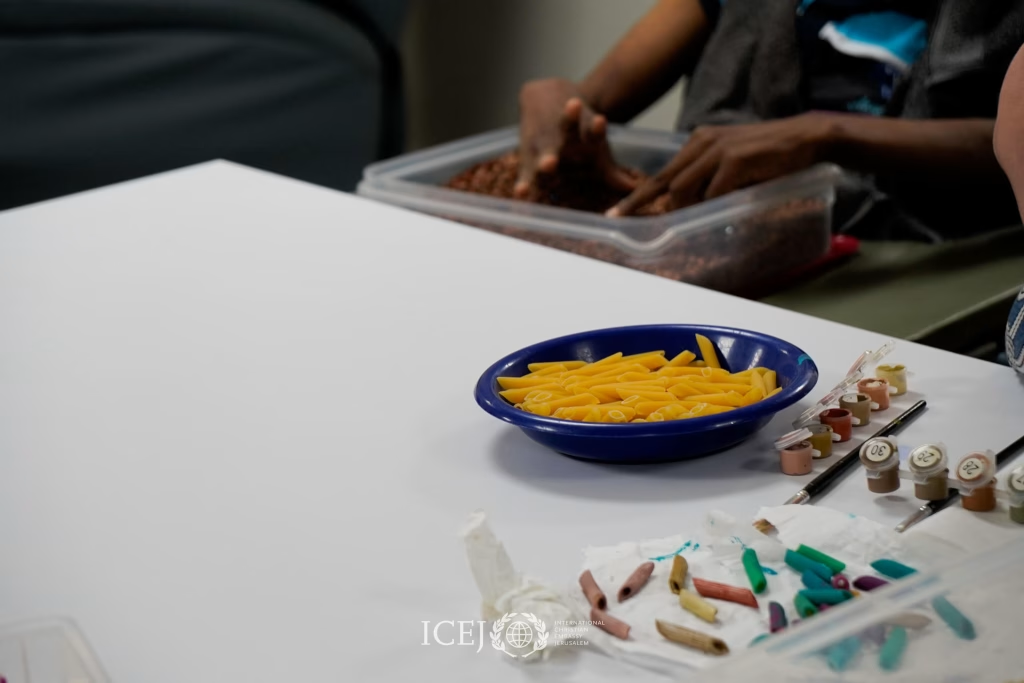
Activities are adapted to each participant’s fine-motor skills, cognitive abilities and individual needs. During the visit, ICEJ staff observed participants sorting coloured beans, painting noodles, playing games and using eye movement to control objects on a computer screen.
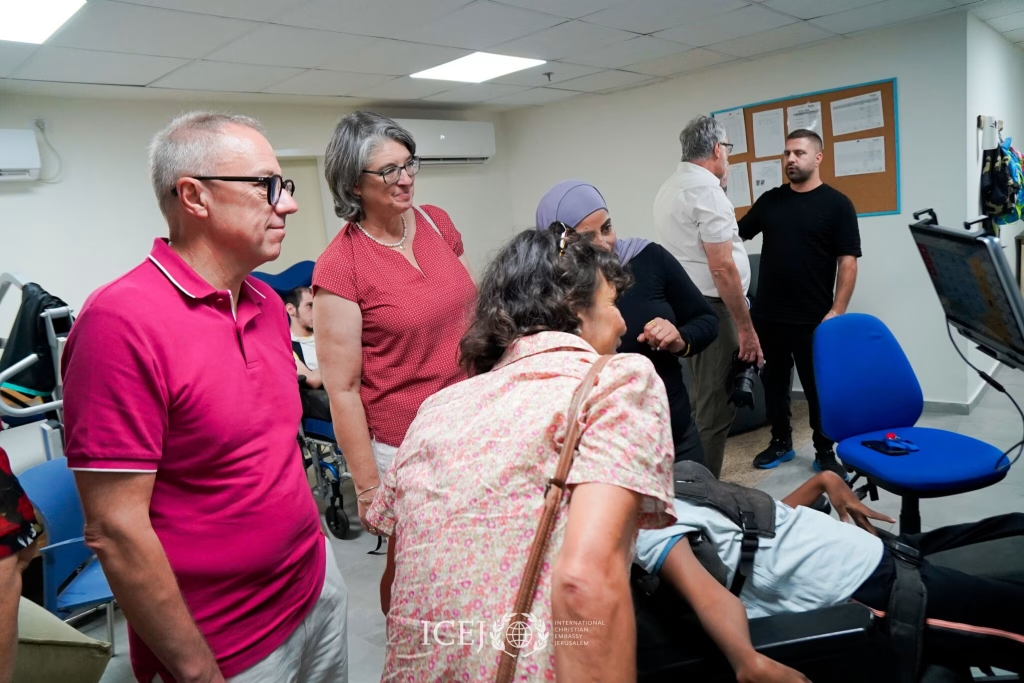
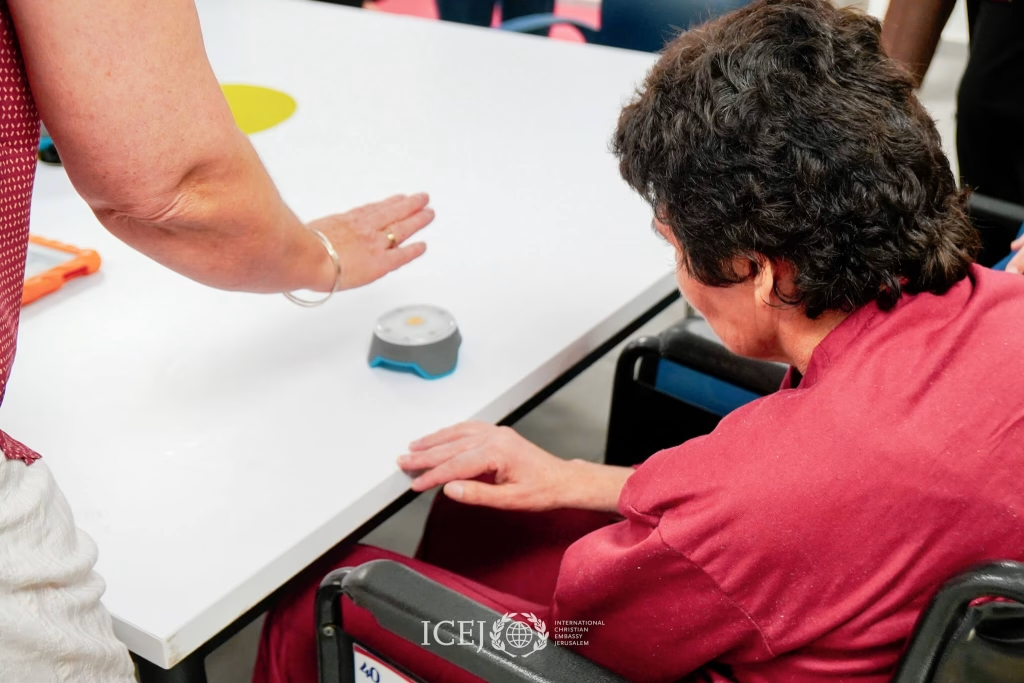
For participants at this special-needs center, the new bomb shelter offers protection, while the center itself offers something more: hope, encouragement, and opportunities to learn, create, work, and grow according to each person’s abilities.
Help Protect Vulnerable Israelis
The ICEJ is dedicated to strengthening communities, protecting vulnerable Israelis and bringing practical Christian love to those who need it. Your support of our Israel Emergency Aid Fund assists this essential work. Please consider a gift today.









Israeli Security Expert Sagiv Asulin Weighs In.